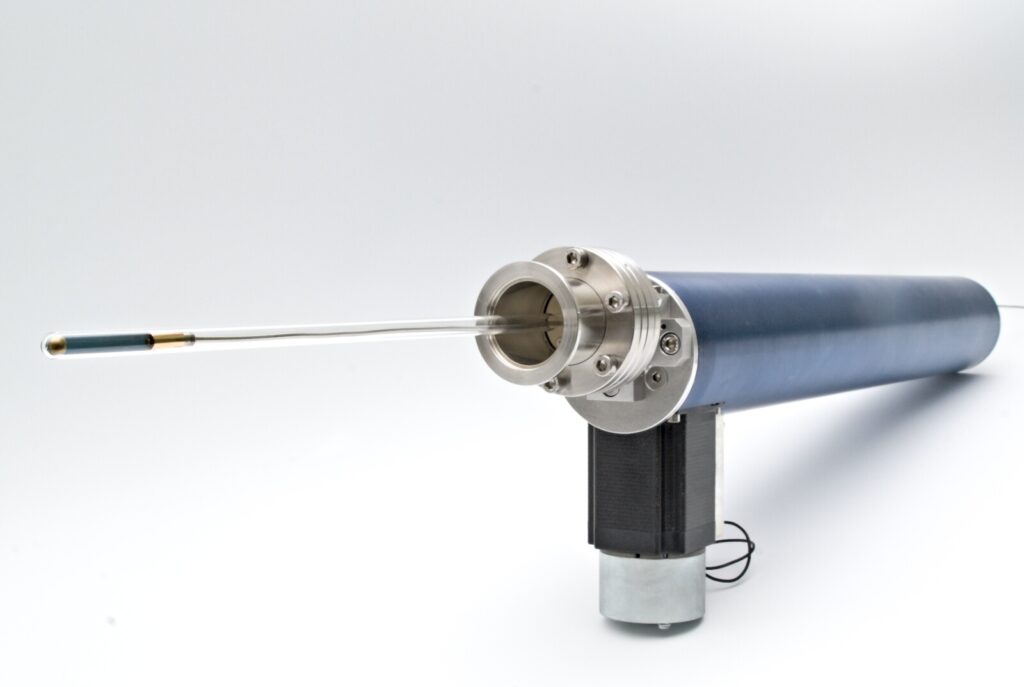
Measurement principle

The Multipole Resonance Probe (MRP) is based on the principle of active plasma resonance spectroscopy (APRS). In this process, the plasma is not only observed, but also specifically examined using a small RF excitation.

  • A weak RF signal is coupled into the plasma via the probe’s electrodes. The frequency of the signal is varied.
  • This signal generates characteristic resonances that are directly related to the electrical properties of the plasma.
  • The resonance frequency and width can be used to precisely determine the electron density, electron temperature, and collision frequency—i.e., the key plasma parameters.
  • The probe is built into a glass tube, making it largely insensitive to dielectric coatings and contamination.
  • The measurement is performed in situ and in real-time directly in the process without disrupting it.

Key advantages of the measuring principle

  • Direct access to the most important plasma parameters
  • Universally applicable in a wide variety of plasma types (capacitive, inductive, DC, RF, MF, pulsed, microwave, etc.)
  • Robust and industry-oriented, as no viewing windows or complicated optical accesses are required
  • Plug-and-play capable for quick integration into existing systems

👉 This distinguishes MRP significantly from conventional diagnostic methods such as optical emission spectroscopy or current/voltage measurements, which only provide indirect information.

Finde here the product brochure.

The four types of Multipole Resonance Probe (MRP)

Our MRP technology is available in four versions, each optimized for different process environments and requirements. All variants are based on the principle of active plasma resonance spectroscopy and provide precise real-time data on electron density, electron temperature, and collision frequency.

MRP FF

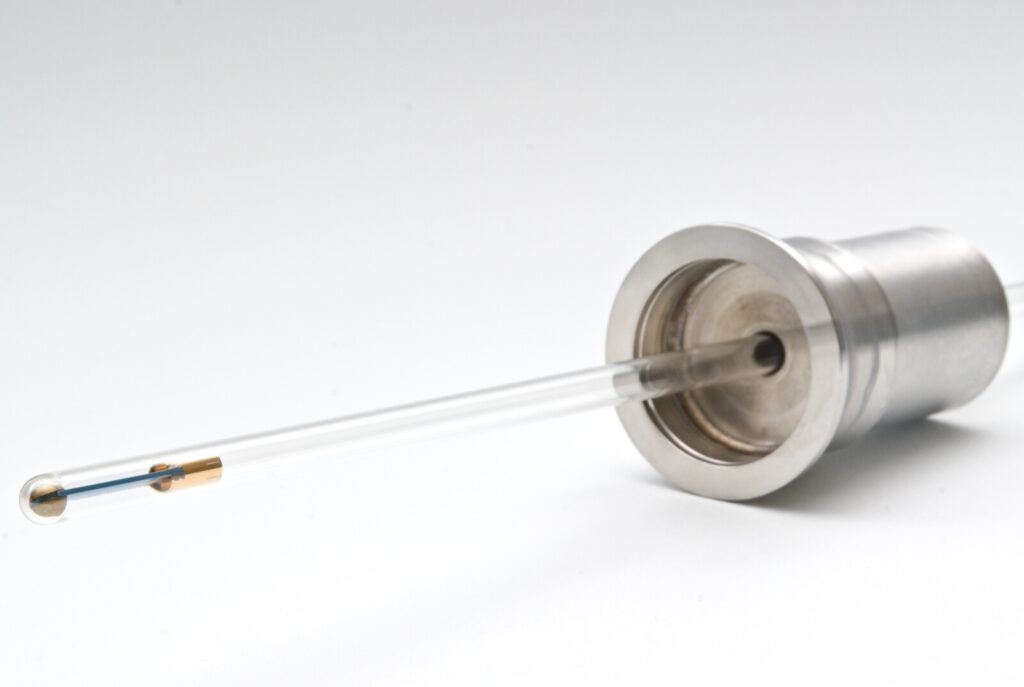
MRP FF Flanschfixierte MRP Einfaches Montieren Alle Elektronik befindet sich außerhalb der Kammer Länge des Glasrohres kann eingestellt werden Geeignet für Monitoring und Regelungssysteme

The versatile standard version for a wide range of applications.

  • Easy mounting on the flange
  • All electronics outside the chamber
  • Adjustable length of the glass tube
  • Perfect for monitoring and control systems
MRP FP

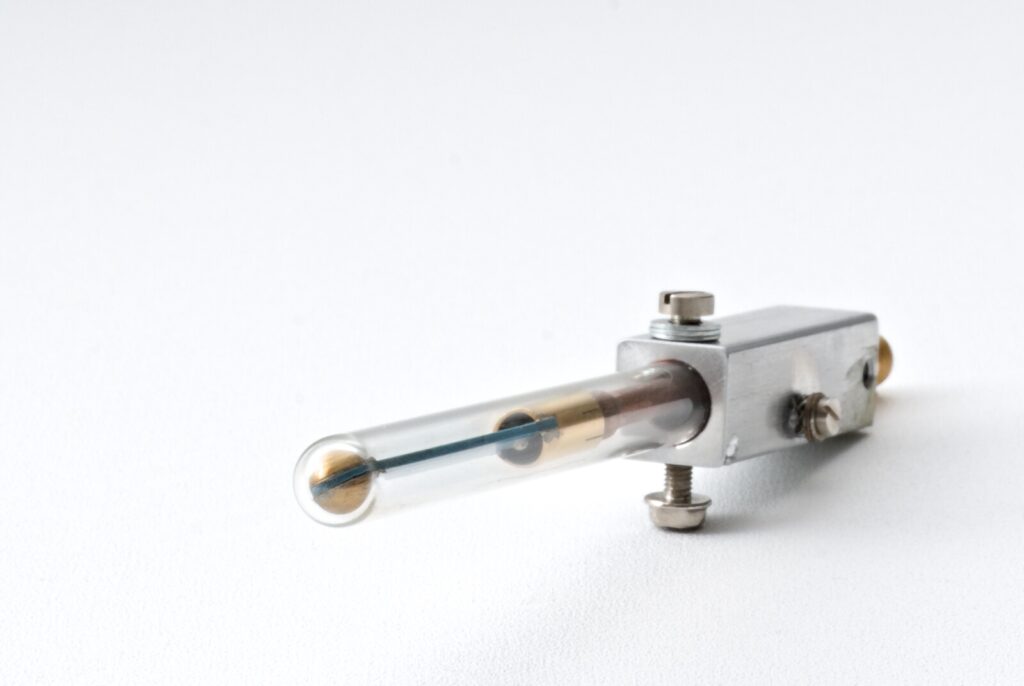
MRP FP Frei positionierbare MRP Flexibelste Positionierung Installation dort, wo kein Abschatten stattfindet Flexibles Kabel im Vakuum zum Flansch Geeignet für Monitoring und Regelungssysteme

This design fits anywhere. Compact construction for tight installation environments. Particularly suitable when classic installation positions are difficult to access or space is at a premium.

  • Flexible positioning
  • Install wherever you want: prevent shading
  • Flexible cables in the plasma reactor
  • Perfect for monitoring and control systems

MRP PM

MRP PM Positioniermechanik MRP Ortsauflösung der Plasmaparameter Schutz der Sonde im Flansch möglich Mechanisches System ist außerhalb der Kammer Geeignet für Forschung und Entwicklung

The powerful design: Positioning mechanics enable spatially resolved measurements to be taken.

  • Spatial resolution of plasma parameters
  • Protection of the probe against coating by concealing it in the flange
  • Positioning system outside the vacuum chamber
  • Perfect for research and development

pMRP

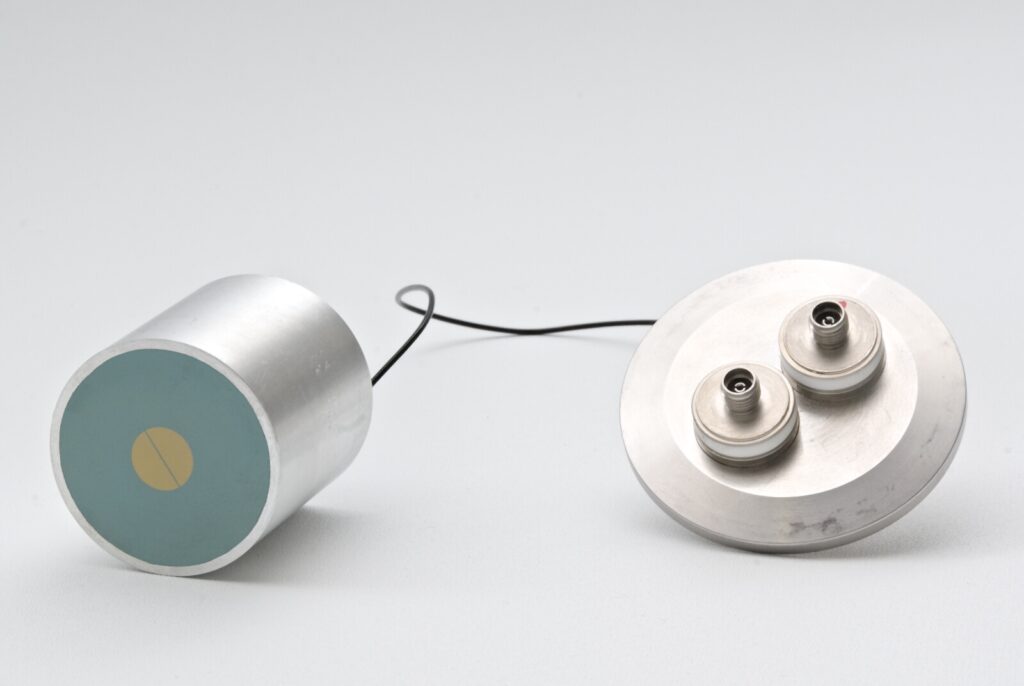
pMRP WI Wandintegrierte planare MRP Sonde ist für den Prozess versteckt Kein Abschatten oder Stören des Prozesses Positionierung im Flansch möglich Geeignet für Monitoring und Regelungssysteme

The planar, wall-integrated sensor has no influence on the plasma—it is hidden.

  • Probe is hidden from the process
  • No shadowing or interference with the process
  • Positioning in the flange
  • Perfect for monitoring and control systems
The Add-ons

Multiple channel system

Up to 5 channels with one electronic – regardless of which probes are connected.

Flange electronics

Signal paths should be kept short. This is achieved with the central measuring electronics located directly on the flange—the rest can be up to 100 meters away or even connected via the network.

AD/IO module

An analog/digital input/output module can be added for various connections. The 5V TTL digital signals or the 0-10V analog signals can be freely linked. This allows control loops to be set up by outputting control variables. Alternatively, the pressure (required for data evaluation) can be supplied. Similarly, the calculated plasma parameters can be converted into analog signals and thus made available to other systems. Everything is possible.

Shutter (development needed)

If the probe needs to be protected, e.g. against metallic coating, a shutter system is required.

GUI

A graphical user interface is available as a stand-alone system or to enable maximum functionality, in which all measured variables can be set and output.

Integration with APIs

Various APIs are available for integration into other systems.

Conclusion: Regardless of your application, you will find the right MRP design in our portfolio—precise, robust, and tailored to your process environment.

Please note our privacy policy.